


Every investor who put money into an Opportunity Zone fund faces the same deadline: December 31, 2026.
That’s when your deferred tax bill comes due (you’ll have until April 15th, 2027 to pay it), regardless of whether your fund has made distributions, whether you’ve held for five years or five months, or whether your investment is up or down. If your fund is illiquid (and most are), you’ll need to find that cash elsewhere.
With over $100 billion invested in OZ funds, the collective tax bill coming due December 31, 2026 could be in the $15-20 billion range, a massive liquidity event for what are mostly illiquid real estate vehicles.
Today, we’ll break down:
what Opportunity Zones are,
how Qualified Opportunity Funds work (and the tax benefits),
and what just changed with OZ 2.0
📚 Sources and further reading are included at the end of the post.
Disclaimer: This article is for educational purposes only and does not constitute investment advice, tax advice, or a recommendation to invest in Opportunity Zones. Consult with qualified tax and financial professionals before making any investment decisions.
How It Stared
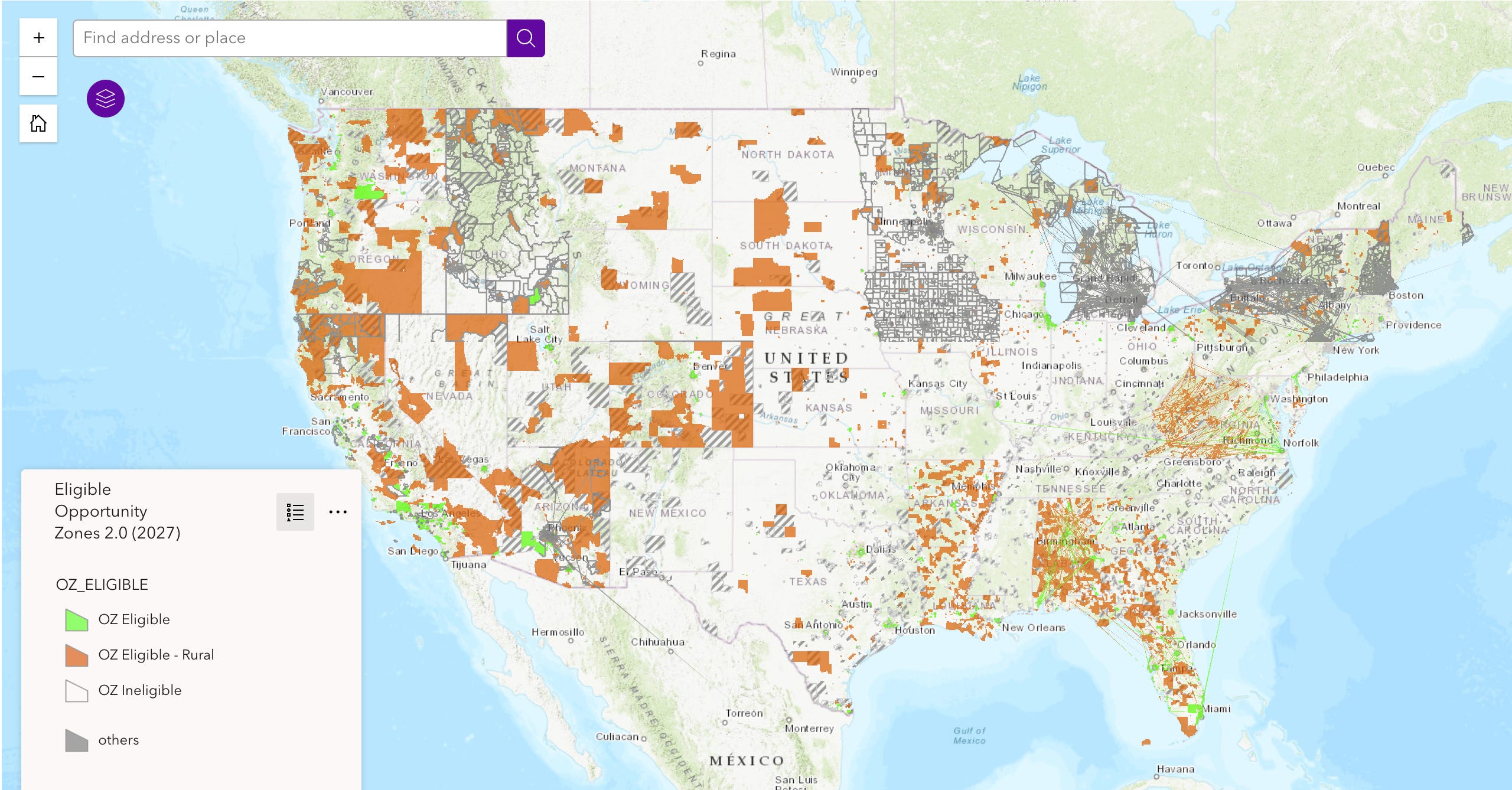
Opportunity Zones were created under the 2017 Tax Cuts and Jobs Act as a way to push private capital into economically distressed areas. Governors nominated eligible census tracts using 2010 census data, and Treasury ultimately certified 8,764 zones across the U.S.
To qualify originally, a tract generally needed either:
A poverty rate above 20%, or
Median family income below 80% of the surrounding area average.
In theory, this was about revitalizing struggling communities. In practice, a lot of capital discovered that some “distressed” neighborhoods were better situated than others (more on that below).
How the Tax Benefits Worked
The original OZ structure offered three incentives: