


We are living through the agricultural revolution in private markets.
That’s when fund managers stopped hunting returns and started farming assets.
The hunter’s model was simple: 2% management fees kept the lights on. 20% carried interest made you rich. Funds were small, and GPs ate what they killed.
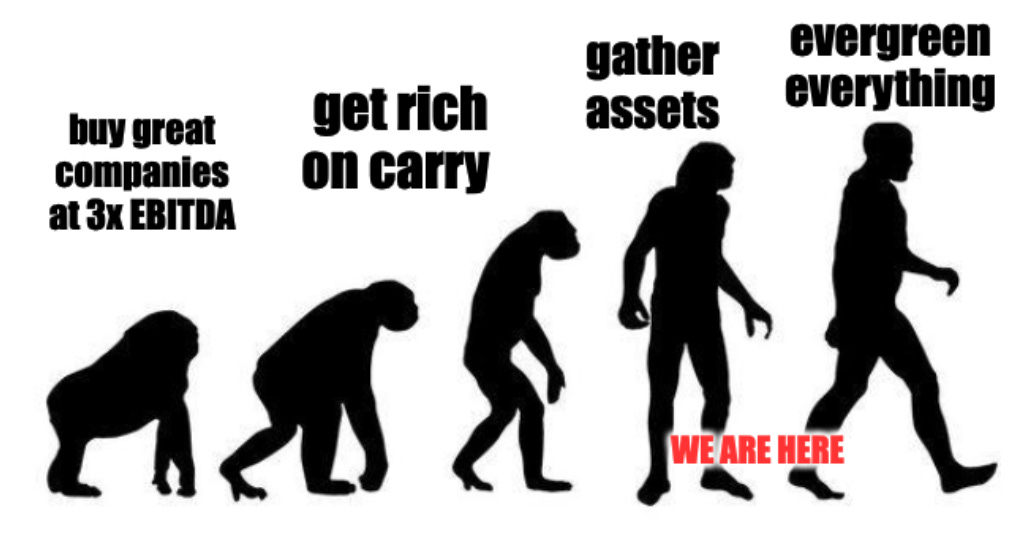
Then the industry discovered agriculture.
Why spend your life chasing unpredictable carry when you can cultivate an ever-growing field of fee-paying capital? Carry once made fortunes. Today, fortunes are made from recurring management fees.
The strongest evidence that gathering won? Management fees fell. It sounds backwards, but I’ll explain.
Case in point: when Bridgepoint agreed to pay $1.4 billion for Kayne Anderson Real Estate this summer, it bought 100% of the fee-related earnings, and just 15% of the carry in historic funds:

Falling Rates, Fatter Harvest
Buyout funds raised in 2025 charged an average management fee of 1.61% (the lowest ever recorded). It’s been a steady 15-year slide (with a brief reversion during the 2020 fundraising boom):
Victory for LPs? Maybe.
Preqin argues the biggest driver is simply fund size. Nearly half of all capital raised in 2025 flowed to the ten largest buyout funds (up from 34.5% in 2024). There are economies of scale in managing larger funds.

But decreasing fee rates do not mean asset managers are earning fewer dollars. Look at the math: