


You’ve heard me foam at the mouth about the use of ASC 820 and the NAV-as-practical-expedient rule in secondary funds. You’ve read my two explainers on how the practice works (and what happens when the fund gets too big).
Today, I’m going to show you a close sibling of that practice, used in new-vintage PE evergreens, that can have a similar effect: massive early IRRs.
Once you see it, you can’t unsee it. And once you understand the math behind it, you’ll see the trade.
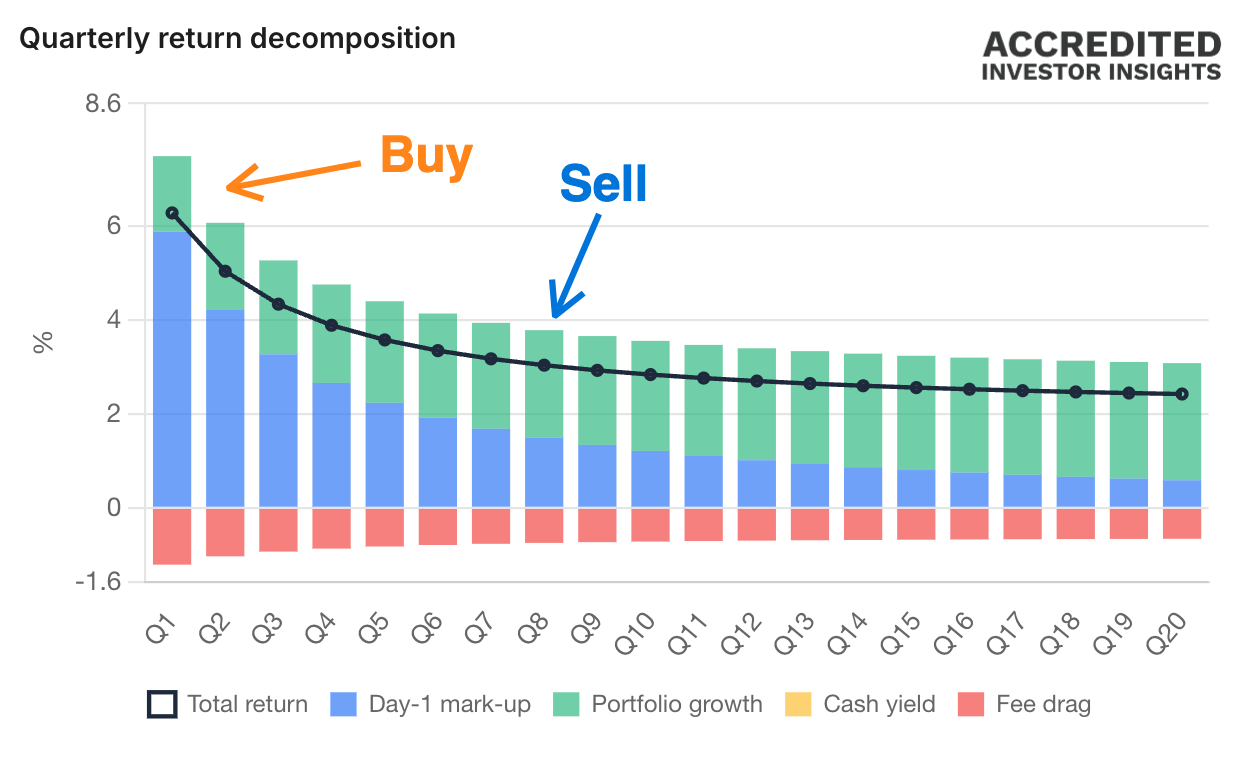
Yes, I said “trade.”
No, I’m not advocating it. As always, none of this is investment advice. This is hypothetical, and today I’m not naming names.
For this hypothetical trade to work, two things need to happen. We’ll get to both later in the article. And because fund GPs are smart people, they’re doing what they can to minimize the number of wiseguys trying to execute the trade. I’ll show you what they’re doing, too.

And by the way: none of this is to say that evergreen PE funds aren’t worth owning. The point here is to understand what’s driving the returns you see in the first few quarters, and whether they reflect actual value creation or an accounting head start (spoiler: it’s often the latter).

The Setup
Imagine you are a large alternative asset manager. You run several flagship private equity funds (call them Fund I through Fund XIII) each one a traditional drawdown vehicle with a long, distinguished track record.
Now imagine you want to launch a new product: an evergreen fund, continuously offered, available to a broader investor base. Let’s say it’s a private equity fund. One that comes with a smooth upward-sloping NAV/share chart, direct investments in companies (rather than stakes in other funds), and supposedly great diversification. Wealth advisers and their HNW clients love those like cats love catnip.
You have a small problem: your new fund has no portfolio and no track record.
Enter the Seed Portfolio
Here’s how it works.